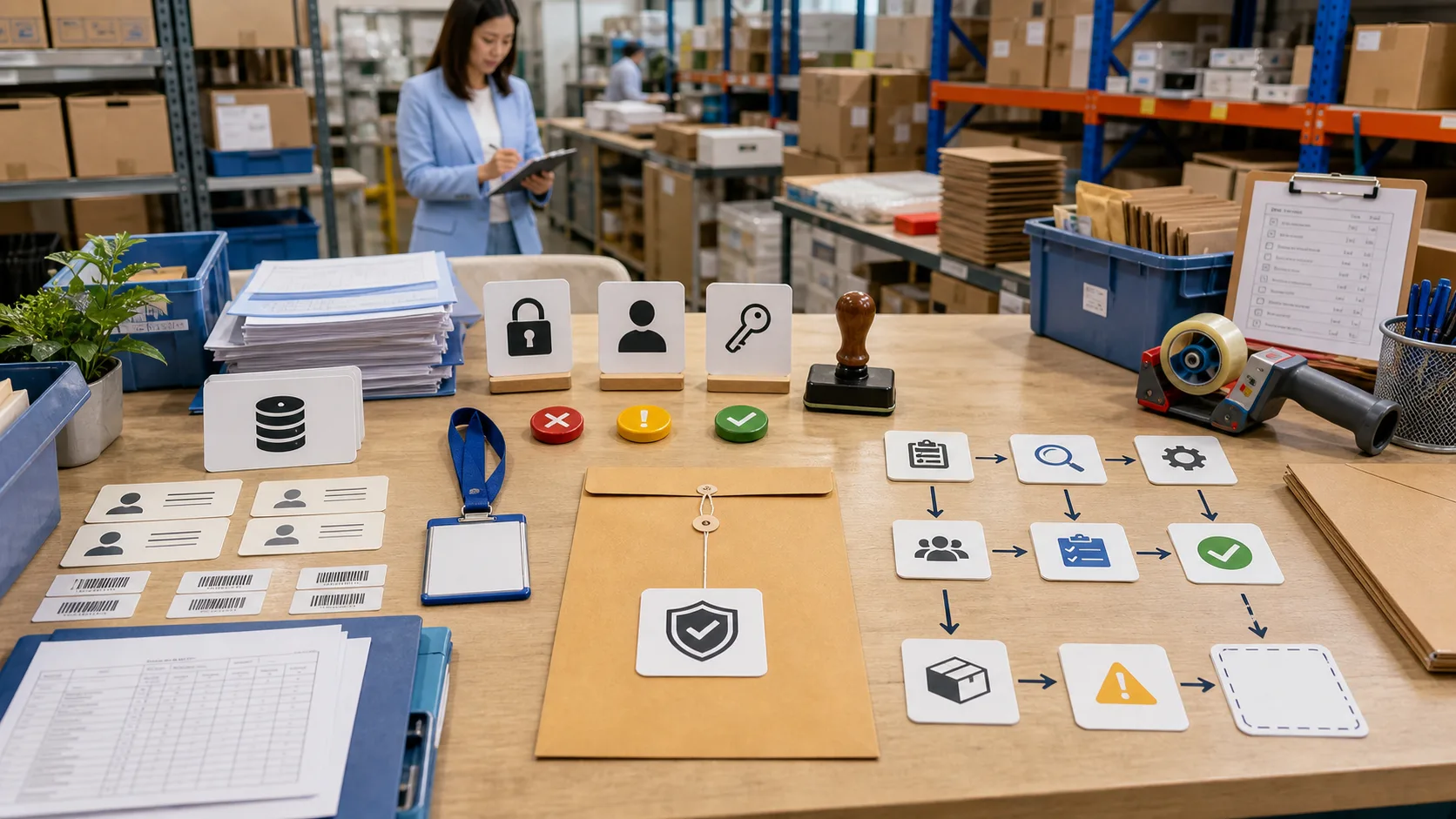
Most SME AI projects do not fail because the model is weak. They fail because the business context is not ready. If the team has not defined its data sources, permission boundaries, approval steps, and exception paths, AI will only accelerate a messy workflow.
The more practical starting point is to confirm whether the business is actually AI-ready: where the operating truth sits, what the AI may see and draft, which actions still need human approval, and which workflow is worth piloting first.
1. The six-part readiness check
| Readiness area | Minimum standard |
| Data map | You know where enquiries, customer records, orders, payments, and tasks live |
| Permission boundary | You have defined what AI may read, draft, and recommend |
| Human approval | Sensitive actions are still routed to staff review |
| Process ownership | Someone owns the next step after AI prepares work |
| First pilot workflow | You start with one measurable use case |
| Exception handling | You know who handles missing data, complaints, special pricing, or stock issues |
2. Map the workflow before you buy more AI
If customer context is still split across forms, WhatsApp, email, spreadsheets, and back-office systems, AI can still produce polished output while missing the real status of the case. A practical readiness map should show where enquiries enter, where the master record lives, where order or service status is updated, and who owns the next action.
If lead ownership and follow-up are the problem, stabilise the CRM software layer first. If communication mostly lives in chat, make the WhatsApp Business API workflow part of a controlled system rather than leaving it as an informal handoff channel.
3. Define what the AI may and may not do
AI readiness is really permission design. The business should decide what the AI may read, what it may prepare, what it may recommend, and what it must never execute automatically.
- Good Phase 1 uses include summaries, reply drafts, follow-up task preparation, and missing-data checks.
- Pricing decisions, payments, sensitive record changes, order-status changes, and large outbound sends usually still need human review.
Current Hong Kong guidance also points toward impact assessment, human-in-the-loop oversight, and privacy-aware deployment. For an SME, the operational takeaway is simple: define the boundary before you automate inside it.
4. Start with one pilot workflow
The safer rollout path is not company-wide AI. It is one repetitive, measurable workflow such as enquiry-to-follow-up, quote preparation, or admin notification handling.
If the real issue is scattered leads and weak ownership, CRM discipline usually comes first. If the real issue is inconsistent order, stock, or fulfilment data, ERP workflow cleanup usually comes first. For broader category context, start with AI Agent Business System Hong Kong and then compare layers in AI Agent vs Chatbot vs CRM vs ERP Automation.
5. Where oneflash fits
oneflash is strongest when a Hong Kong SME already has a real workflow problem: too much manual coordination across website forms, WhatsApp, CRM, email, spreadsheets, and internal systems; repeated preparation work before replies; or management concern about permissions and approval control.
If quoting and order coordination are the bottleneck, the adjacent workflow layers are B2B ordering system and inventory management system. If the use case is education or admin-heavy operations, the relevant reference is the education-centre workflow.